Roof insulation is the most cost-effective energy investment you can make in a home. Heat rises, and in a Belgian house built before the 1990s, the roof is often the least protected part of the building envelope. At Toiture En Ligne, we have been insulating pitched and flat roofs for 15 years in Brussels, Walloon Brabant, Hainaut and Flanders. Together with you, we choose the technique that suits your roof, your budget and the way you use your loft space.
Why insulate your roof?
- Lower heating costs: a properly insulated roof significantly reduces the heat lost from the house.
- Better summer comfort: good insulation, especially dense insulation, slows down the overheating of rooms under the roof.
- Less condensation: insulation combined with a correctly installed vapour barrier limits moisture in the roof timbers.
- A higher property value: roof insulation improves the energy performance certificate (EPC), which buyers and tenants look at more and more closely.
- Less noise: rain, hail and traffic are clearly muffled.
The roof insulation techniques we offer
Sarking: insulating from the outside
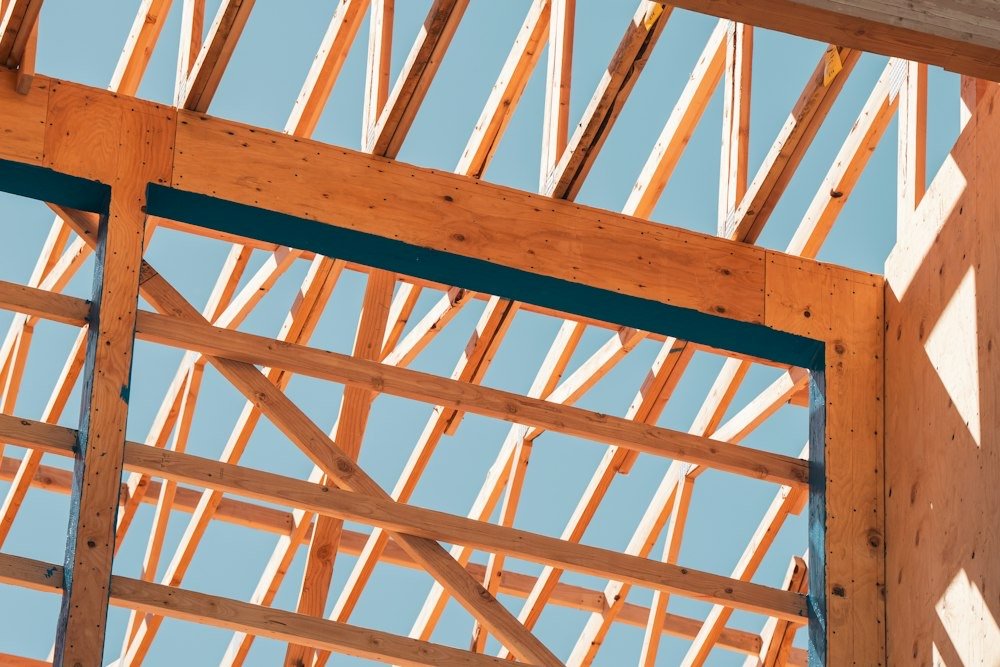
Sarking involves laying rigid insulation boards directly on top of the rafters, over the roof structure, before the covering is put back on. The insulation forms a continuous layer with no interruption at the rafters, which eliminates thermal bridges. The loft keeps all of its volume and the roof timbers can remain visible if you wish. This is the technique we recommend whenever the roof covering has to be replaced anyway, as part of a roof renovation.
Insulation between and under the rafters
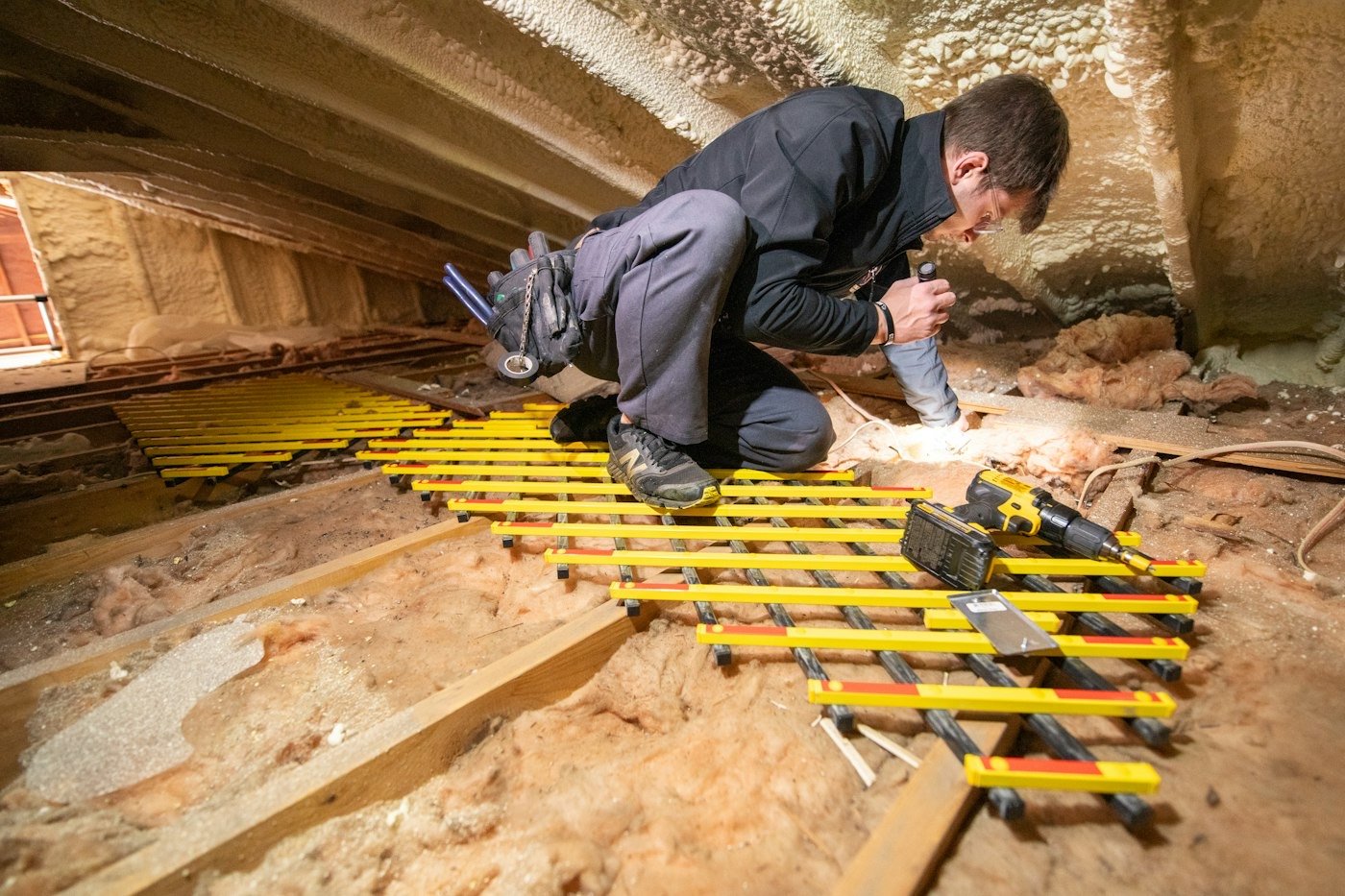
When the roof covering is in good condition, we insulate from the inside: a first layer of flexible insulation is fitted between the rafters, then a second, crossed layer under the rafters breaks the thermal bridges. A continuous vapour barrier, carefully taped at every joint, is essential to prevent indoor moisture from condensing inside the insulation. This solution is cheaper, but it slightly reduces the ceiling height. Our article on sarking or internal insulation compares the two approaches in detail.
Loft floor insulation
If your loft is not lived in and never will be, insulating the loft floor is a simple and economical solution: only the heated part of the house is protected. We lay boards or loose-fill insulation, with a walkable floor if you want to use the space for storage.
Flat roof insulation
On a flat roof, the insulation is preferably laid on top of the deck, under the new waterproofing membrane: this is the warm roof principle, the most reliable in our climate. We combine it with an EPDM or bituminous membrane. See our flat roof page.
Which insulation material should you choose?
| Insulation | Strengths | Good to know |
|---|---|---|
| PIR / PUR | Very high performance at low thickness, ideal for sarking and flat roofs | Less effective against summer heat |
| Rock wool | Non-combustible, good acoustic insulation | Must stay completely dry |
| Glass wool | Economical, easy to fit between rafters | Vapour barrier essential |
| Wood fibre | Bio-based, excellent summer comfort, breathable | Thicker for the same performance |
| Cellulose | Bio-based, made from recycled paper, ideal as loose fill | Installed by blowing |
We aim for a thermal resistance of at least R = 4.5 to 5 m²K/W for the roof. This is the level generally required by regional support schemes, and the level that really makes a difference to your bills. If the environmental impact of your project matters to you, we offer bio-based insulation such as wood fibre or cellulose, which also perform very well against summer heat.
How a roof insulation project works
- Visit and inspection: condition of the covering, the underlay and the roof timbers, measurement of the surfaces, identification of damp spots.
- Technical proposal: technique, insulation material, thickness and the thermal resistance achieved, with a detailed, itemised quote.
- Preparation: protection of the rooms, removal of old insulation where necessary, repair of damaged timber.
- Installation of the insulation in one or two crossed layers, with tight joints and no gaps.
- Airtightness: a continuous vapour barrier or vapour control layer, with taped junctions around roof windows and penetrations.
- Finishing: plasterboard, timber cladding or a new roof covering, depending on the technique chosen.
- Handover: photos of every stage, technical data sheets for the materials and a detailed invoice for your paperwork.
How much does roof insulation cost?
The price depends on the technique, the insulation material and access to the roof. Here are indicative price ranges excluding VAT, as observed in Belgium:
- loft floor insulation: €25 to €50 per m²;
- insulation between and under the rafters, including finishing: €60 to €110 per m²;
- sarking insulation, excluding a new covering: €90 to €160 per m²;
- flat roof insulation with a new membrane: €110 to €180 per m².
For a private home that is more than ten years old, the work may qualify for reduced VAT at 6%.
Grants for roof insulation
Support for roof insulation changed profoundly in 2026. In Flanders, the Mijn VerbouwPremie remains open to households in income categories 3 and 4, provided a thermal resistance (Rd) of at least 4.5 m²K/W is achieved. In Wallonia, the Habitation grants were replaced on 1 October 2026 by subsidised loans linked to an energy audit. In Brussels, Renolution grants are no longer awarded for recent invoices. Full details are available on our pages for Wallonia, Brussels and Flanders.
Our advice
Keep the technical data sheets for the insulation and the installation photos we give you: they are often requested for a grant application or for a future energy performance certificate.
Why choose us for your roof insulation?
Insulation only works if it is continuous and airtight: a poorly sealed joint or a punctured vapour barrier can cancel out much of the expected benefit. Our teams install the insulation in crossed layers, tape every junction and send you photos of each stage before the finishing covers everything up. You know exactly what has been installed, and how thick it is. Every project comes with written guarantees and a single site manager you can reach at any time.
Frequently asked questions
How thick does insulation need to be for effective roof insulation?
It depends on the material. To reach R = 4.5 m²K/W, allow roughly 10 to 12 cm of PIR, or 16 to 20 cm of mineral wool or wood fibre. We calculate the exact thickness for your project.
Can I insulate without replacing the roof covering?
Yes, from the inside, between and under the rafters, or through the loft floor. Sarking, on the other hand, requires the covering to be removed.
How long does the work take?
Allow a few days for a loft floor or internal insulation, and one to three weeks for sarking with a new roof covering.