Roof maintenance is often forgotten as long as everything is fine. The roof is out of sight, and you only think about it when a stain appears on the ceiling. Yet most leaks and costly damage could have been avoided with regular checks. A well-maintained roof lasts longer, insulates better and costs less to repair. Here is our calendar, season by season, and what falls to the owner or to the professional.
Why is roof maintenance important?
- To prevent leaks, which damage insulation, ceilings and roof timbers.
- To extend the lifespan of the covering and the zinc work.
- To keep the warranty on certain materials, which assumes normal maintenance.
- To keep your insurance cover: damage due to lack of maintenance is often excluded.
- To plan work rather than deal with it in an emergency.
The roof maintenance calendar
In spring: taking stock after winter
Winter puts the roof to the test: frost, storms, snow. In spring, walk around the house and look at the roof from the ground, with binoculars if necessary:
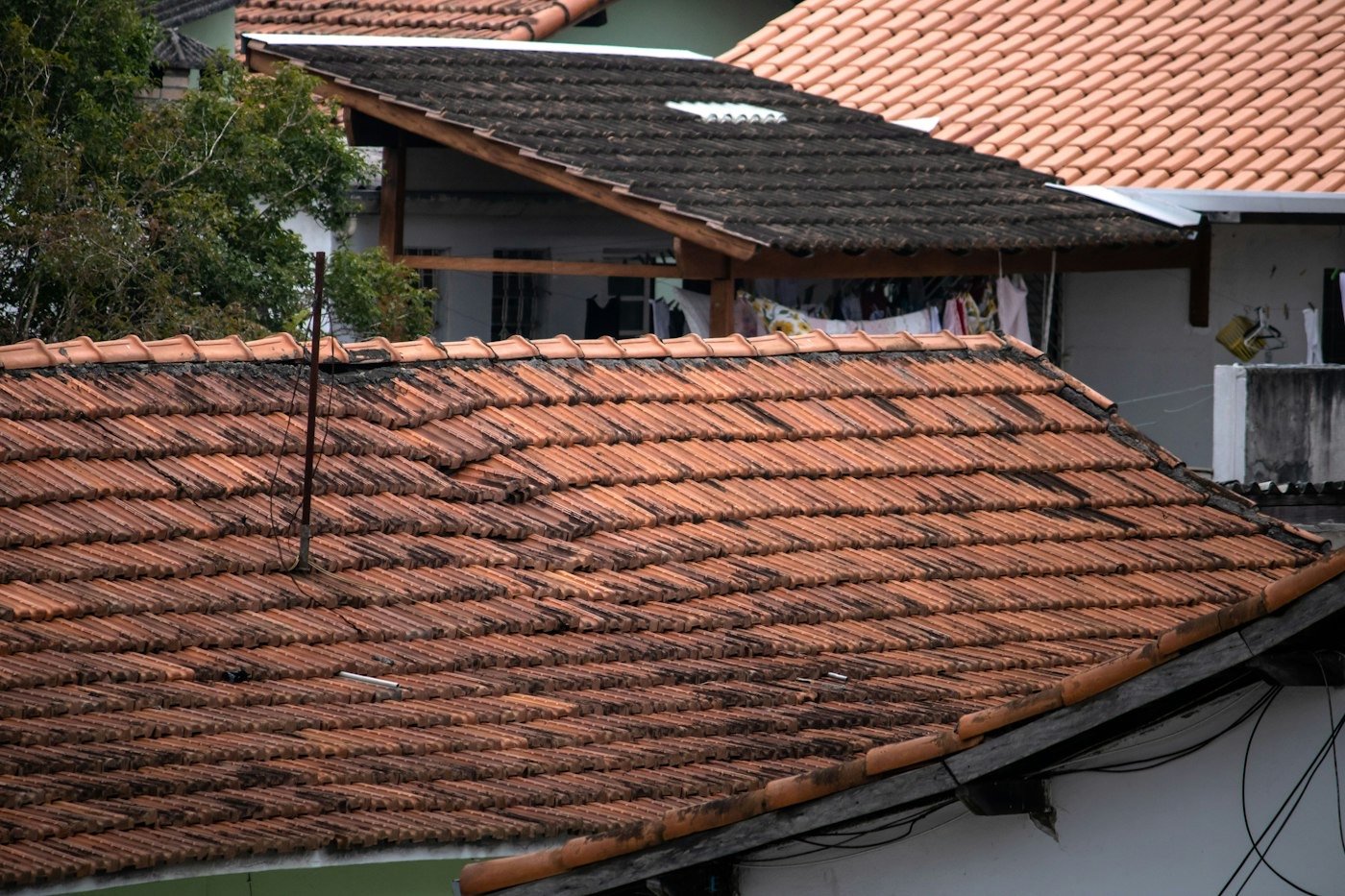
- tiles or slates that have moved, broken or gone missing;
- loose ridge tiles;
- sagging or disconnected gutters;
- signs of damp in the loft or on the ceilings;
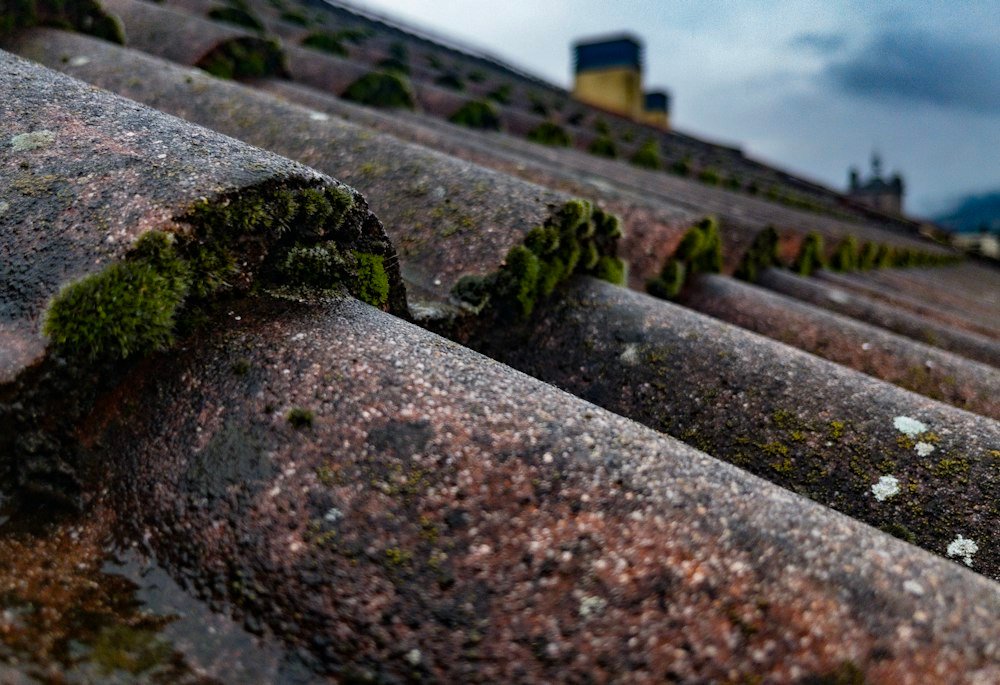
- moss growing on north-facing slopes.
It is also a good time for moss removal and an anti-moss treatment, in dry weather.
In summer: work and inspections
Summer is the ideal season for roofing work and thorough inspections. The days are long and the weather more stable. Take the opportunity to have your roof checked by a professional if it has not been done for two or three years, and to schedule the repairs spotted in spring. On a flat roof, check that no puddles remain after storms.
In autumn: gutters first
Autumn is the key moment. Leaves fall and block gutters, downpipes and outlets just before the season of rain and storms:
- clean the gutters once the leaves have fallen;
- check that downpipes are flowing freely;
- clear the outlets on flat roofs;
- cut back branches overhanging the roof;
- check the chimney flashings before the heating season.
In winter: keep watch without climbing
In winter, you do not go up on the roof. You keep watch: after every storm, a look from the ground and in the loft lets you spot damage quickly. If snow builds up heavily or icicles form along the eaves, it is often a sign of insufficient insulation letting the snow melt from below.
After a storm
Always walk around the house. A tile that has moved today means a leak at the next rainfall. Our article on storm damage explains what to do.
What you can do yourself
- Look at the roof from the ground, with binoculars or a camera with a zoom.
- Inspect the loft with a torch: water marks, compressed or blackened insulation, daylight visible through the covering.
- Clean accessible gutters safely from a stable ladder, never in wet weather.
- Clear a small ground-floor flat roof.
What is a job for a professional
- Any work on the roof itself, at height or on a slope.
- Replacing tiles, slates or ridge tiles.
- Moss removal and treatments.
- Repairing zinc work and flashings.
- A full inspection, with a photo report.
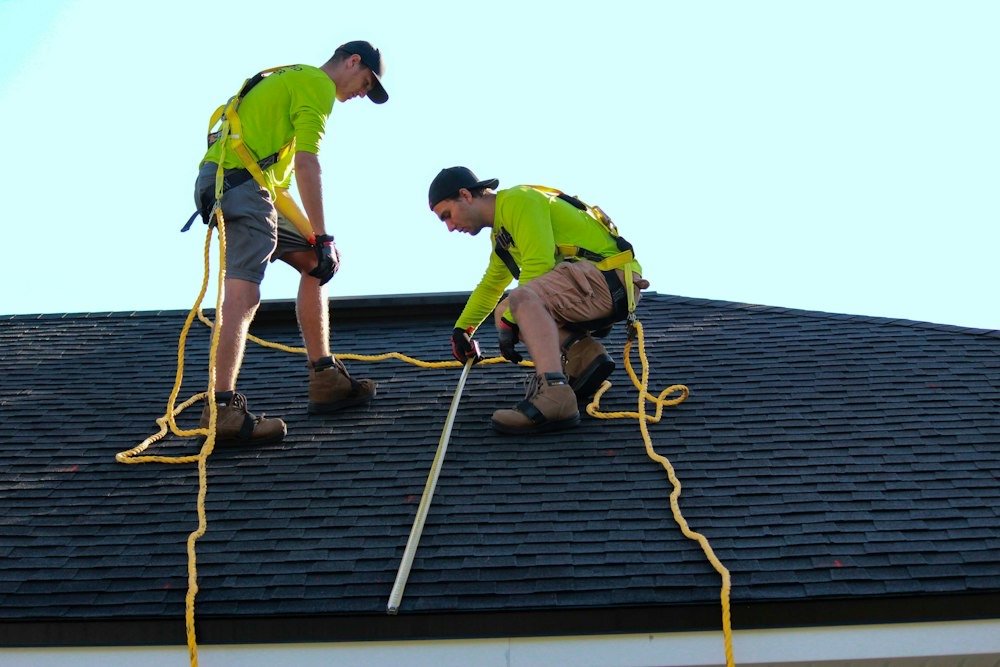
Every year, serious falls occur during small roofing jobs carried out without equipment. A roofer has the harnesses, roof ladders and experience needed.
How often should your roof be inspected?
| Situation | Recommended frequency |
|---|---|
| Recent roof, well exposed | Every 3 to 5 years |
| Roof more than 25 years old | Every 2 years |
| House surrounded by trees | Every year, with the gutters |
| Flat roof | Every year |
| After a major storm | Always |
The weak points to watch first
During roof maintenance, certain elements deserve special attention, because they account for most leaks:
- Chimney flashings, often cracked by freeze-thaw cycles;
- valleys, where the water and leaves from two slopes meet;
- the surrounds of roof windows, whose flashings age;
- ridge tiles, exposed to wind and frost;
- box gutters built into cornices, where a leak often goes unnoticed until the timber rots;
- flat roof upstands, along walls and parapets.
An experienced roofer checks these points first and warns you of signs of wear before they turn into leaks. That is the whole point of preventive maintenance: spending a few dozen euros where a leak would cost thousands.
Keeping a roof log
Record in a notebook or a digital file the date and nature of every job, with photos and invoices: moss removal, repairs, gutter cleaning, replacing a roof window. This record helps the roofer target the inspection, serves as proof of maintenance for the insurer and reassures a future buyer.
How much does roof maintenance cost?
An inspection with a report, gutter cleaning or replacing a few tiles are modest budgets, out of all proportion to the cost of a leak that has soaked the insulation and ceilings. A periodic maintenance contract means you no longer have to think about it and benefit from regular follow-up of your roof.
Roof maintenance and energy use
A well-maintained roof also helps to keep energy bills down. Insulation soaked by a small leak loses much of its effectiveness, and displaced tiles let cold air in under the covering. Regular checks keep the insulation dry and the heat inside, so roof maintenance pays off in a longer lifespan and a lower energy bill.
Frequently asked questions
Is roof maintenance compulsory?
There is no general legal obligation, but your insurance policy may exclude damage caused by a lack of maintenance. Regular maintenance is therefore strongly recommended.
How long does an inspection take?
For a single-family home, a full inspection generally takes one to two hours, including the loft, depending on access.
Does a new roof need maintenance?
Yes, if only lightly: cleaning the gutters and checking the roof after storms is useful from the very first year.
In summary
Good roof maintenance comes down to a few appointments: a check in spring, work in summer, gutters in autumn, monitoring in winter and a professional inspection every two to three years. Our roofers work in Brussels, Walloon Brabant, Hainaut and Flanders for inspections, moss removal and roof repair.