The green roof has become a familiar sight in Belgian towns in recent years. In Brussels, Flanders and Wallonia, planted roofs are appearing on extensions, garages and apartment buildings. It is not just about looks: a green roof provides real benefits, for the home and for the city. But it also comes with some technical requirements. Here is what you need to know.
How is a green roof built up?
A green roof is not soil spread on a roof. It is a multi-layer build-up laid on suitable waterproofing:
- The deck and, generally, the roof insulation.
- The waterproofing, root-resistant or protected by a root barrier.
- A mechanical protection layer, often a fleece.
- A drainage layer, which removes excess water while holding a reserve.
- A filter, which stops fine particles clogging the drainage.
- The substrate, lightweight and purpose-made, unlike garden soil.
- The planting, chosen according to the substrate depth and exposure.
A vegetation-free gravel strip is kept along the edges and around the outlets to make maintenance easier and stop plants invading the drainage.
Extensive or intensive: two types of green roof
The extensive green roof
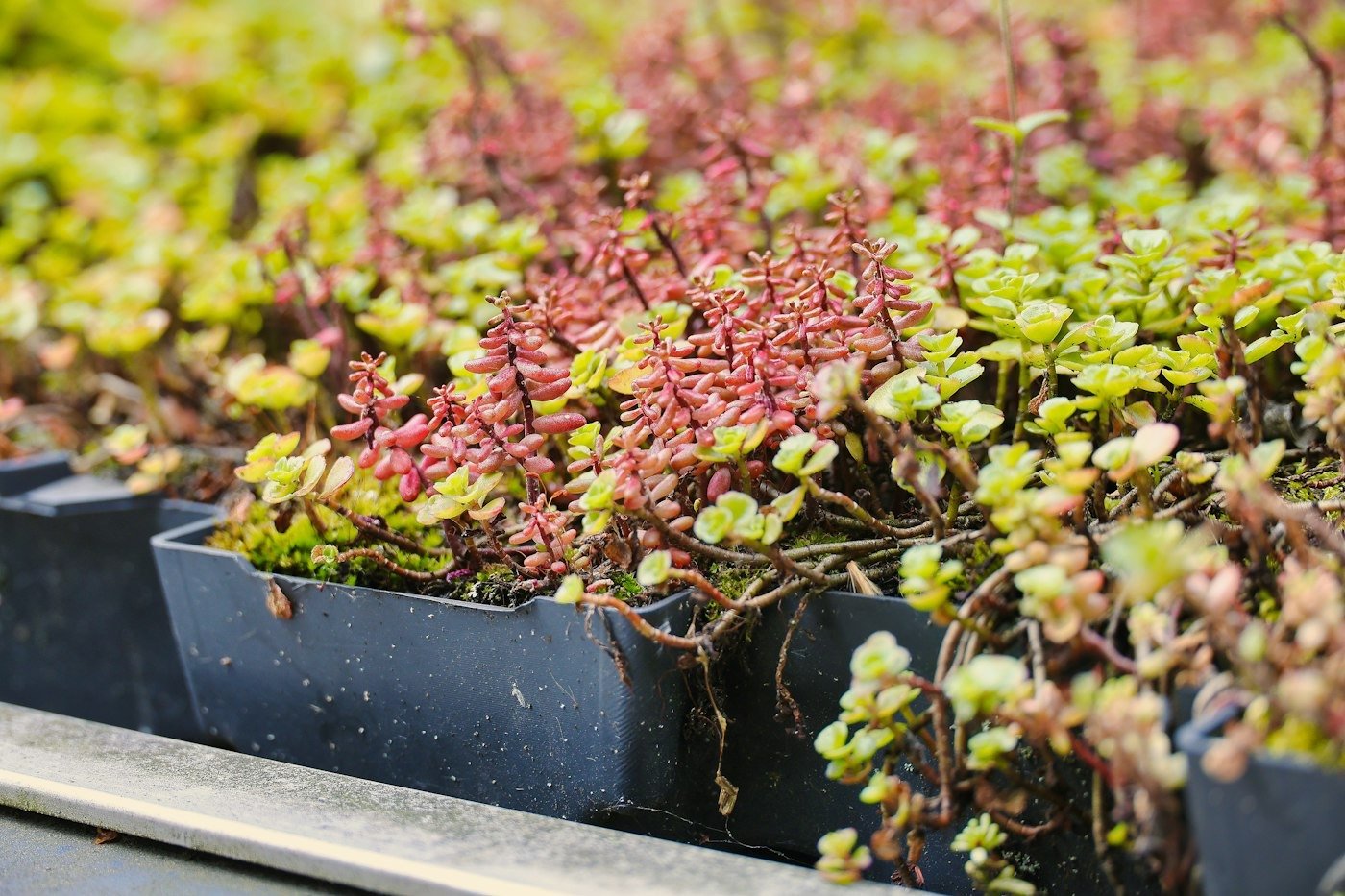
This is the most common type on houses. The substrate is thin, from a few centimetres to around ten, and the planting consists of sedum, moss and small drought-tolerant plants. It is light, needs very little maintenance and suits most flat roofs and gently pitched roofs, subject to a structural check.
The intensive green roof
The substrate is much deeper and supports grasses, perennials, shrubs and sometimes small trees. It is a real garden on the roof, accessible and usable. It is much heavier, needs regular watering and maintenance, and requires a structure designed accordingly.
| Criterion | Extensive | Intensive |
|---|---|---|
| Substrate depth | Shallow | Deep |
| Saturated weight | Light | Heavy |
| Planting | Sedum, moss | Grasses, perennials, shrubs |
| Maintenance | 1 to 2 visits a year | Regular, with watering |
| Access | No, except for maintenance | Yes |
| Structure | Check required | Reinforcement often needed |
The benefits of a green roof
- Rainwater management: the roof retains part of the rainfall and slows run-off, relieving the sewers during storms.
- Summer comfort: the planting and substrate limit overheating in the room below.
- Protection of the waterproofing: the membrane is sheltered from UV, hail and temperature swings, which extends its life.
- Biodiversity: pollinating insects and birds benefit from these small natural spaces in town.
- Sound insulation: the build-up dampens outside noise.
- Appearance: a green view from upstairs instead of black roofing felt or gravel.
Points to watch
The structure
Even an extensive green roof adds significant weight when saturated with water. The load-bearing capacity of the roof must be checked, by an engineer if necessary. It is the first question we ask.
The waterproofing
It must be in perfect condition and root-resistant. A suitable EPDM membrane or bitumen with a root barrier is appropriate. If your flat roof is more than twenty years old or is not insulated, renew the waterproofing before planting: repairing it under a green roof would cost far more. Our article on the EPDM flat roof compares the membranes.
The pitch
Flat and gently pitched roofs are easy to plant. Beyond a certain pitch, anti-slip systems are needed.
Planning
An extensive green roof barely changes the appearance of the building and often does not require planning permission. Some regulations even encourage or require it for new buildings. An accessible intensive roof that creates a terrace, on the other hand, generally requires a permit.
Choosing the right plants
On an extensive green roof, sedum is the most widely used: these succulents store water in their leaves and withstand both drought and frost. Their foliage changes colour with the seasons, from green to red, and their flowers attract pollinators. They can be combined with moss, low grasses and a few hardy perennials where the substrate is a little deeper. Exposure matters: a heavily shaded roof needs a different selection from one in full sun.
How much does a green roof cost?
As a guide, an extensive green roof costs a few tens of euros more per square metre, excluding VAT, than a simple renovated flat roof, depending on the system chosen and the area. An intensive roof costs considerably more, especially if the structure has to be reinforced. Some municipalities offer grants for green roofs: check with your local authority.
Maintaining a green roof
An extensive roof needs one or two visits a year: removing unwanted plants, especially tree seedlings sown by the wind, checking the gravel strips and outlets, and replanting bare patches. A suitable fertiliser can be useful every few years. An intensive roof is looked after like a garden.
A green roof and solar panels
The two work well together. The planting cools the area around the panels, which can slightly improve their efficiency in summer. Special mounting frames, ballasted by the substrate, avoid piercing the waterproofing. You simply need to make sure the plants do not shade the modules.
A green roof and rainwater rules
In Flanders and Brussels, rainwater rules increasingly require water to be buffered on the plot wherever possible. A green roof contributes directly to this and, in some cases, can count towards the required buffering capacity. For a new build or a major renovation, it is worth including it in the design from the outset.
Frequently asked questions
Does a green roof cause leaks?
No, provided the waterproofing is suitable and in good condition. It even protects the membrane. Leaks come from old or badly detailed membranes, with or without planting.
Does a green roof need watering?
An extensive sedum roof generally needs no watering, except sometimes just after installation or during an exceptional drought. An intensive roof does need watering.
Can a pitched roof be planted?
Yes, on moderate pitches, with suitable retention systems. Beyond that, the technique becomes more complex and expensive.
In summary
A green roof manages rainwater, protects the waterproofing, improves summer comfort and brings a little nature into town. It requires a strong enough structure and flawless waterproofing. Our teams build flat roofs and plant them in Brussels, Walloon Brabant, Hainaut and Flanders: discover our roof terrace and roof conversions service.